
Publishing a research paper in an international journal can be a rewarding experience, but it requires careful planning, quality work, and adherence to the journal’s standards. Here is a simple guide of approach to how to publish a research paper in international journal.
Choose the Right Topic
Relevance: Select a topic that is not only interesting to you but also relevant to the broader academic community. Consider current trends, you have interest in or related to your academic course area, unresolved problems, or areas that are under-research.
Originality: Your paper should offer new insights or solutions. Avoid plagiarism established knowledge, aim for innovation in your approach, methodology, or findings.
Conduct Thorough Research
Literature Review: Conduct a comprehensive review of existing literature to identify gaps. This will help you position your research in the context of on-going debates and developments in the field.
Data Collection: Ensure your data is reliable, valid, and relevant to your research objectives. It must support and contribute meaningfully to the topic.
Write a Standardized Manuscript
Structure: Follow a clear structure; Abstract, Introduction, Methodology, Results, Discussion, and Conclusion. Ensure that each section is logically connected.
Clarity and Precision: Be concise and clear in your writing. When you are using technical terms, make sure to explain them. Ensure that your argument flows logically.
Data Presentation: Use tables, charts, and figures effectively to present data. Make sure they are well-labelled and easy to understand.
Citations and References: Properly mention all sources of information you use in your research.
Submit Your Manuscript / Article Processing Charges
Follow Guidelines
Formatting: Every journal has specific formatting guidelines, including font size, margins, and manuscript writing. Make sure your paper adheres to these guidelines to avoid rejection on technical grounds.
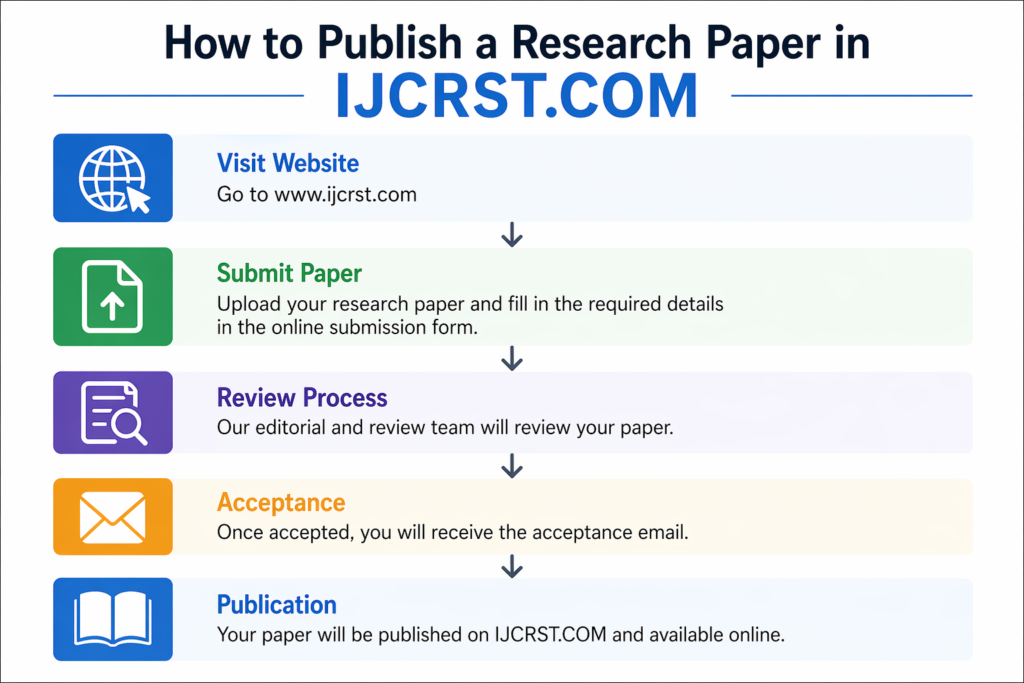
Submit and Peer Review Process
Submit: Once your paper is ready, submit it via the journal’s submission platform, which could be online or through email. Double-check that everything is in order before submission.
Peer Review: After submission, your paper will typically go through a peer review process. Experts in your field will evaluate the quality, originality, and impact of your work. Be prepared for critical feedback.
Revisions: Based on reviewer comments, you may need to revise your manuscript. Address all feedback thoughtfully, providing clear explanations for the changes you’ve made.
Respond to Reviewer Comments
Polite and Professional: Respond to reviewers with professionalism, even if you disagree with some of their comments. Make sure to explain any changes you’ve made.
Revise Your Paper: Make the necessary revisions as suggested by the reviewers. This may involve clarifying concepts, adding data, or refining your arguments.
Final Approval
Resubmit: Once revisions are complete, resubmit your manuscript. Some journals may ask for further revisions before final acceptance.
Acceptance: If accepted, your paper will go through the final stages of editing, which could include copyediting, formatting, and proofreading.
Promote Your Paper: Once published, promote your research on academic networks, social media, and through professional networks. The wider your paper reaches, the more impact it can have. This will increase its visibility and enhance your reputation as a researcher.
Stay Persistent
Rejections Are Normal: Not every paper will be accepted on the first attempt. If your paper is rejected, consider the feedback, revise accordingly, and submit.
Continuous Improvement Publishing is a skill that improves with practice. Keep writing, researching, and submitting your work. Learn from each experience to enhance your future publications.
By following these steps, you can increase your chances of successfully publishing your research in a reputable international journal. It takes effort, patience, and persistence, but the reward is well worth it.
